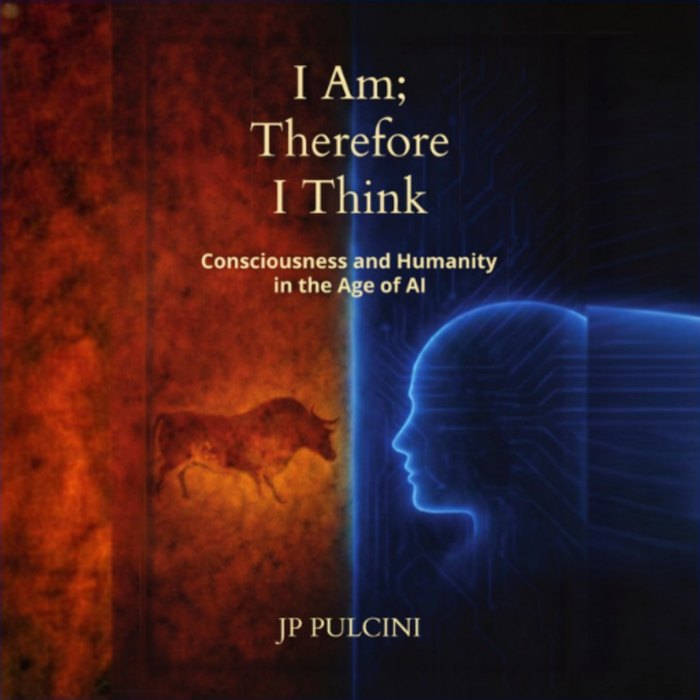
Read by the author
Audiobook
In my own voice, with a companion PDF of the book’s illustrations.

Nonfiction · Philosophy of mind · AI · 2026
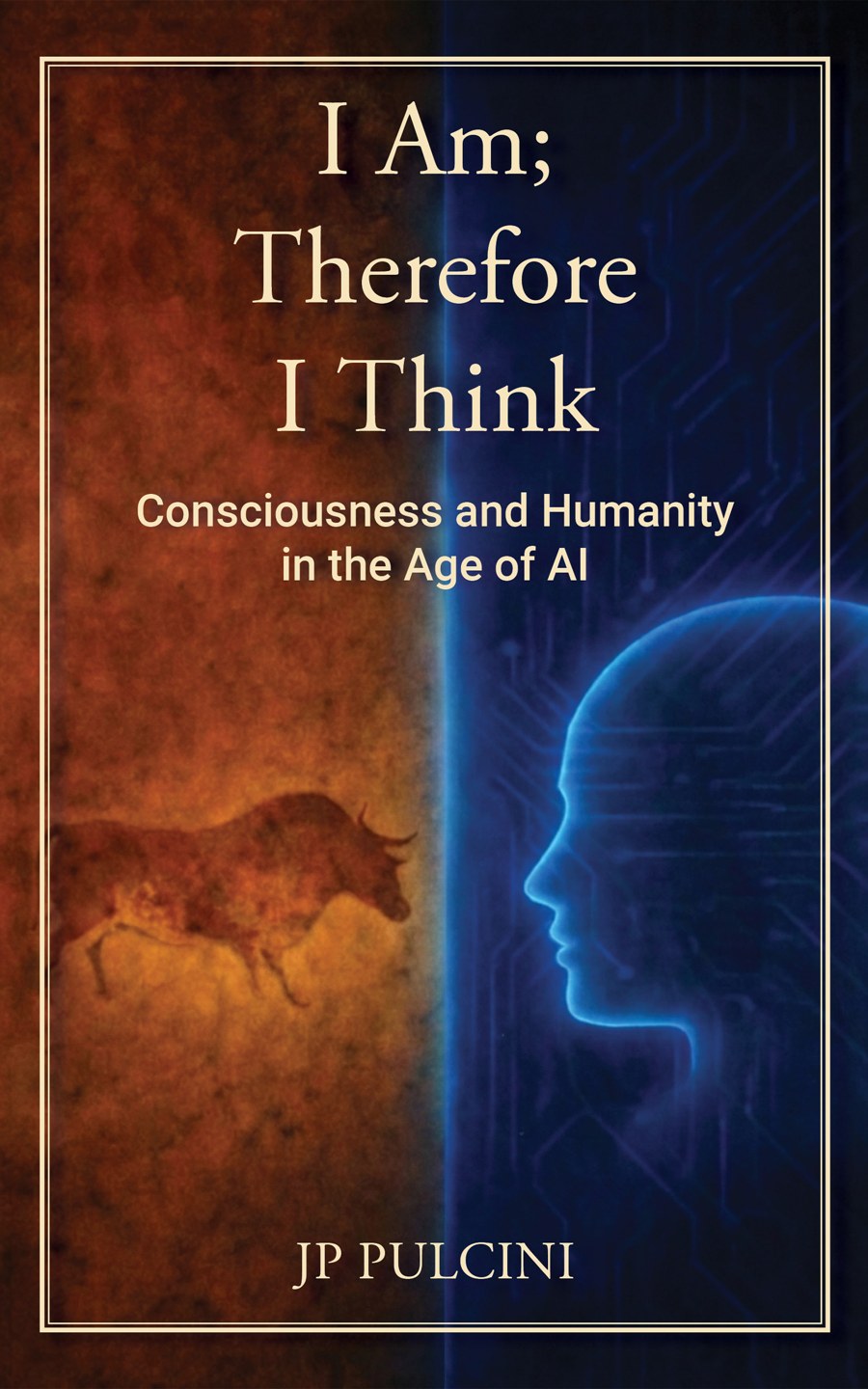
Consciousness and Humanity in the Age of AI
Descartes said “I think, therefore I am.” AI can now think, or something close to it. So what is left that’s ours? This book argues that intelligence and consciousness were never the same thing, and that the difference is what makes us human.



What the book is about
These systems write, reason and create. They don’t experience any of it. The book follows that gap through philosophy, neuroscience, memory, imagination and film, from the cave paintings at Lascaux to Blade Runner and The Matrix.
It is a book written not for academics, but for anyone unsettled by the question of what we are becoming alongside the machines we are building.
The last word of the book is humility. That was on purpose.
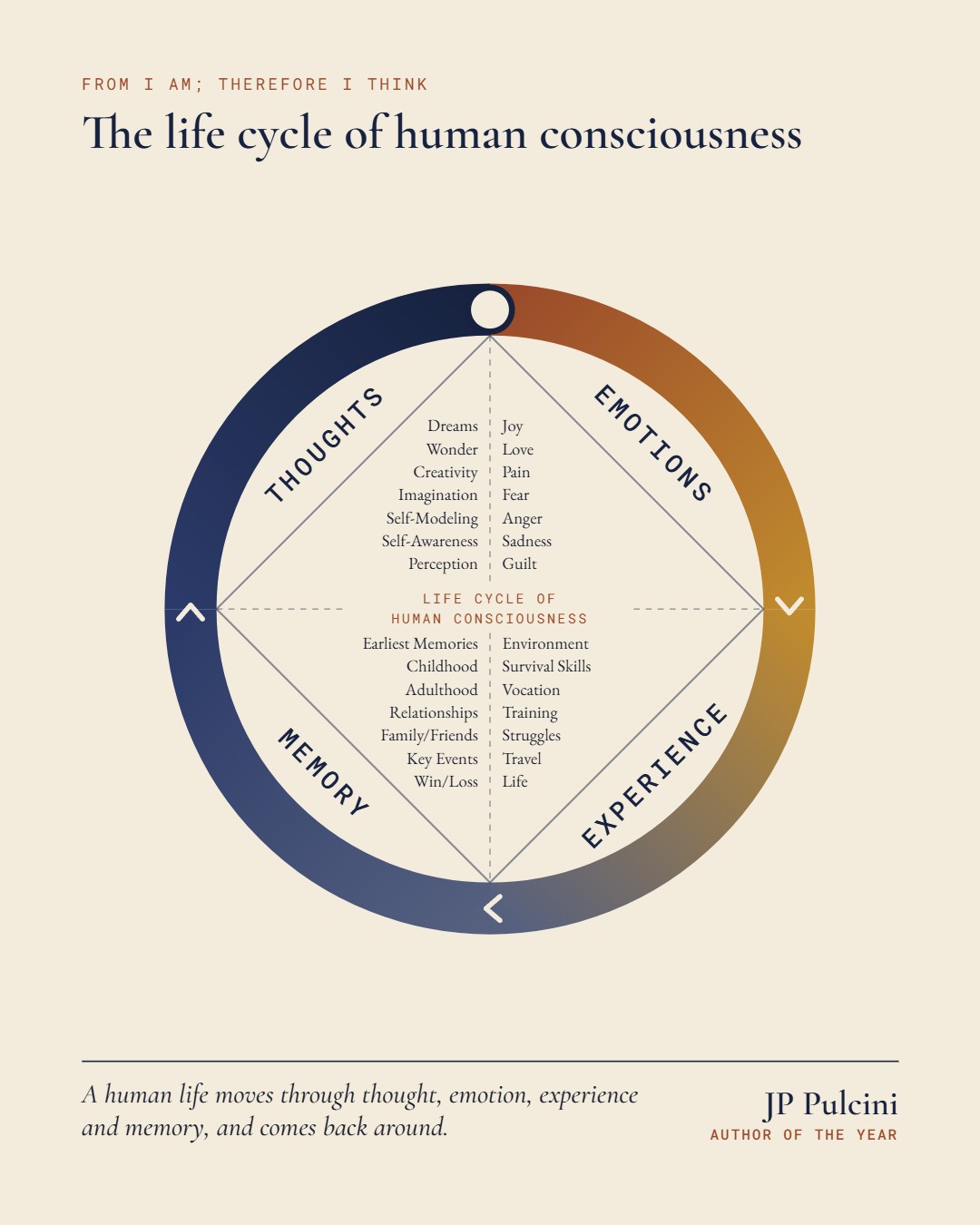
From the book · The life cycle of human consciousness
A machine can run a loop. Only a person can come full circle.
See the full diagram →From the author

When I began writing I Am; Therefore I Think, I was not simply trying to write a book about artificial intelligence. I was trying to understand why the rise of AI feels so personal, so unsettling, and so important.
The more capable machines become at imitating thought, language, creativity, and emotion, the more urgent the human question becomes. What does it mean to think? What does it mean to remember? What does it mean to feel, imagine, fear, love, and exist as a conscious being?
This book grew from my belief that the future of AI cannot be understood through technology alone. It must also be understood through philosophy, neuroscience, memory, identity, embodiment, and lived human experience.
My hope is that readers come away not only with a deeper understanding of artificial intelligence, but with a renewed appreciation for the fragile, mysterious, and deeply human nature of consciousness itself.
— JP Pulcini
Get the book
Four simple options. Each one takes you straight to the right store.
Read by the author
In my own voice, with a companion PDF of the book’s illustrations.
Fastest shipping
Kindle, paperback or hardcover, with Prime delivery.

Best quality
Hardcover and paperback on heavier 70 lb paper, printed to order and shipped direct.

Any e-reader
One link that lets you pick your store: these four and six more.




Bookstores & libraries
Order through Ingram, or ask your local store to.
ISBN hardcover 979-8-9947828-1-1 · paperback 979-8-9947828-0-4
On the shelf in Seattle
Third Place Books · Lake Forest Park, Ravenna, Seward Park
Barnes & Noble · University of Washington
“…the book gathers real moral weight.”
“A learned and thought-provoking meditation on AI.”
Interviews
Literary Titan
The Question That Changes EverythingWhy the real question isn’t whether AI can think, but whether it can experience.
IndieReader
Advice from IR Approved Author JP Pulcini“Write the book you need to write, not the book you think will sell.”
From readers
★★★★★
“I rarely rate a book with 5 stars, especially a non-fiction book. However, you can tell what I think by the number of underlines and flagged sections.”
★★★★★
“If you love books that make you stare at the ceiling questioning consciousness while simultaneously adding 17 tabs to research philosophy at 2AM, this is your book. Thought-provoking, emotional, unsettling, and weirdly beautiful all at once.”
★★★★★
“It doesn’t just ask big questions—it invites you to sit with them. Each chapter unfolds like a conversation that lingers long after you’ve finished reading.”
★★★★★
“The reflective tone here is its strength—it’s about turning the spotlight back on us rather than predicting a sci-fi future.”
★★★★★
“It presents complex ideas about consciousness in a way accessible to general readers without heavy academic jargon.”
★★★★★
“The author blends philosophy and modern technology in an accessible way, prompting readers to question what truly separates human thinking from machine processing.”
Where the argument goes next